
Pattern selection is where a stamped concrete project becomes personal. The structural specs — subgrade prep, concrete thickness, rebar, PSI mix — are determined by engineering requirements. The pattern is determined by the homeowner’s taste, the home’s architecture, the surrounding landscape, and how well the design holds up in the High Desert’s specific climate conditions.
Not all stamped concrete patterns perform equally in the Mojave Desert environment. Some textures are better suited to the extreme heat, UV exposure, and desert aesthetic of Victorville, Apple Valley, and Hesperia than others. This guide covers the most popular and best-performing patterns for High Desert backyards and patios — what each looks like, what home styles it suits, and what to consider when choosing.
How Stamped Concrete Patterns Work
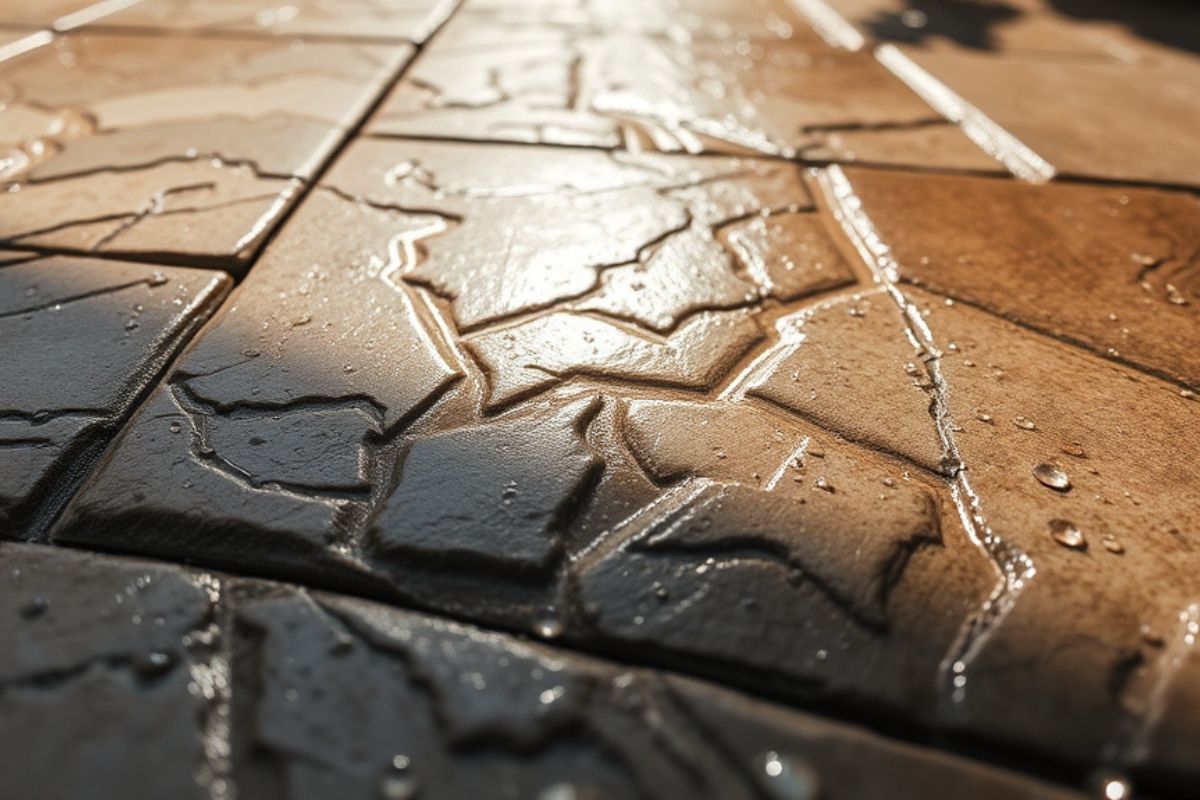
Stamped concrete patterns are created by pressing textured mats or rollers into fresh concrete before it fully sets. The mats are made from polyurethane molds cast from real stone, brick, wood, or slate surfaces — which is why quality stamped concrete can be genuinely difficult to distinguish from the natural materials it replicates. The pattern is a surface impression in the concrete itself, not a coating applied on top, so it cannot peel or separate from the slab.
Color is added through integral pigments mixed into the concrete base, release agents applied to the stamp mats before pressing to create tonal variation, and in some cases surface stains or antiquing washes applied after cure. The combination of pattern and color is what creates the finished appearance — the same pattern in two different color treatments can look like entirely different materials.
Viva Concrete maintains an inventory of pattern mats specifically selected for High Desert residential applications, and uses UV-stable color products rated for Mojave Desert sun exposure. Browse the full range of options on the stamped and decorative concrete service page.
Top Stamped Concrete Patterns for High Desert Backyards and Patios
1. Ashlar Slate
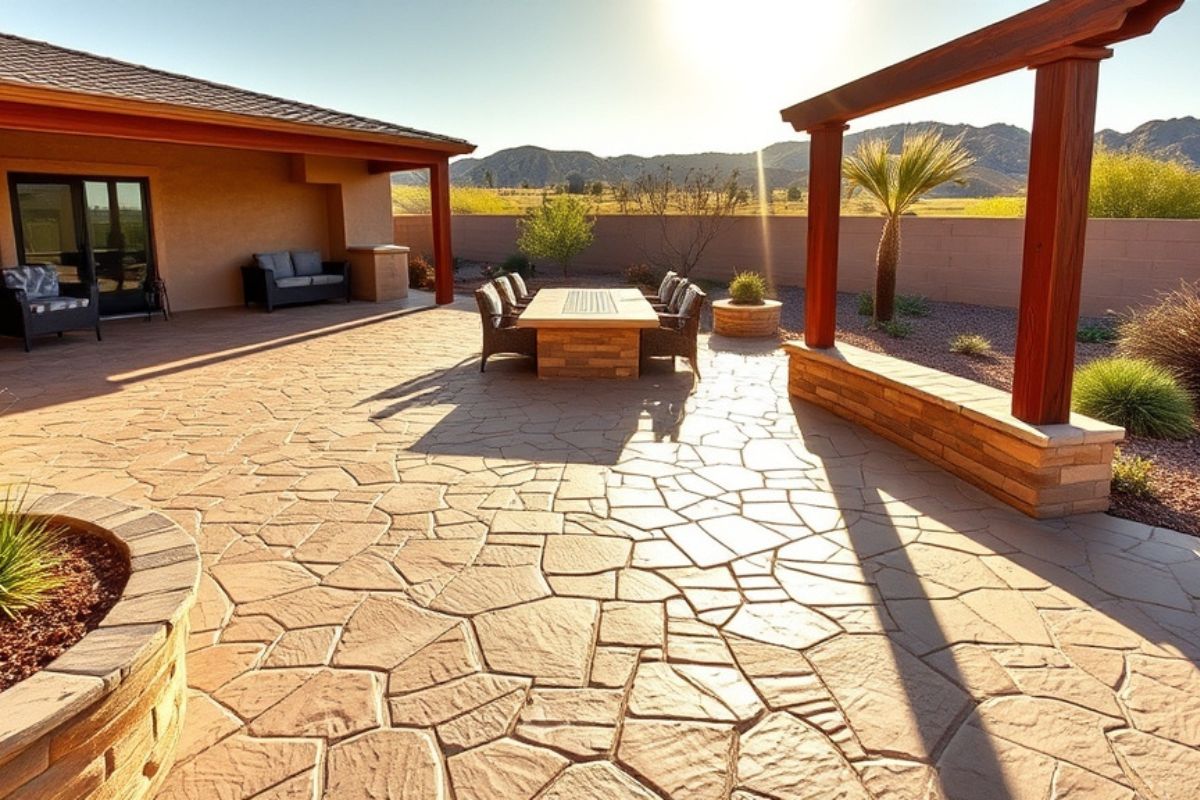
Ashlar slate is the most popular stamped concrete pattern in the Victorville and Apple Valley market — and for good reason. It replicates the look of cut stone arranged in a random rectangular pattern, creating a surface that reads as sophisticated and natural without the cost or maintenance of real stone. The irregular joint lines and varied stone sizes give the pattern visual interest at any scale, from a small courtyard to a large backyard entertainment area.
In the High Desert context, ashlar slate in warm desert tones — sandstone, terra cotta, or buff — integrates naturally with the surrounding landscape. The pattern’s scale works well on large patio areas without becoming visually repetitive, and the textured surface provides reliable traction even when desert dust and sand accumulate on the surface.
Ashlar slate is a strong choice for concrete patios and walkways across Victorville and Apple Valley where the patio is a primary outdoor living space adjacent to desert landscaping.
2. Cobblestone
Cobblestone patterns replicate the rounded, irregular stones of classic European paving, creating a surface with more texture and visual density than slate patterns. The pattern works particularly well on driveways, courtyard entries, and border details where a more formal or traditional appearance is desired.
In High Desert applications, cobblestone stamping in charcoal gray, aged brown, or warm tan creates a strong visual statement from the street that complements both traditional and transitional home styles. The deep texture of a cobblestone pattern provides excellent traction — a practical advantage on driveways and entry areas. The pattern’s scale makes it most effective on smaller areas or as a border treatment around a larger plain or slate-stamped field.
3. Flagstone
Flagstone patterns replicate the organic, irregular shapes of natural flagging stone — the large, flat pieces used in traditional patio and garden path construction. The pattern has a more casual, organic quality than ashlar slate, with irregular joint lines and stone shapes that vary more dramatically in size and outline.
Flagstone stamping in desert sandstone tones is one of the most visually authentic-looking patterns available — quality flagstone stamped concrete is difficult to distinguish from real stone in photographs and from a normal viewing distance. For High Desert homeowners who want the look of natural flagstone at a fraction of the cost, this pattern delivers the closest result.
Flagstone is particularly well suited to outdoor living areas and pool decks in Hesperia and Oak Hills where the patio connects to a natural landscape setting.
4. Running Bond Brick
Running bond brick replicates traditional red or tan brick laid in a classic offset pattern. It’s one of the most recognizable and widely applicable patterns available, working well on driveways, walkways, pool decks, and patio areas with equal versatility. The familiar scale and regularity of the brick pattern gives spaces a clean, finished appearance that suits virtually any home style.
In the High Desert, brick patterns in warm tan, terracotta, or aged red complement both ranch-style homes and newer construction. The pattern’s uniform scale makes it forgiving on irregular shapes and easier to execute cleanly around curves and transitions than larger-format patterns like flagstone or ashlar.
5. Wood Plank
Wood plank stamping replicates the linear grain and plank-to-plank joints of wood decking, creating a surface that reads as warm and organic without any of the maintenance challenges real wood presents in the High Desert’s temperature extremes. Real wood decking in Victorville’s climate requires constant maintenance to prevent cracking, splitting, and UV fading — stamped concrete wood plank delivers a similar visual result with none of those issues.
Wood plank is an increasingly popular pattern for covered patios and outdoor living areas in Rancho Cucamonga and Apple Valley where homeowners want the warmth of a wood aesthetic without committing to a real wood surface. It pairs naturally with outdoor furniture in natural tones and works well adjacent to stamped concrete pool decks where a wood-toned surface creates a resort-like atmosphere.
6. Seamless Texture Patterns
Seamless texture patterns — including stone texture, slate texture, and various aggregate-look finishes — create a continuous textured surface without defined joint lines between individual stones or tiles. The result is more abstract than pattern-specific stamps, creating visual interest through texture and color variation rather than a recognizable material replication.
Seamless textures work well as field treatments paired with a more defined border pattern in a picture frame design, or as standalone treatments on smaller areas like walkways and steps where a simpler visual approach is appropriate. They’re also well-suited to pool decks where a non-slip surface is the primary requirement and a subtle texture aesthetic is preferred over a bold pattern.
How to Choose a Pattern for Your High Desert Project
Three factors should guide pattern selection: the home’s architectural style, the scale of the project area, and the color palette being used.
Architectural style determines which patterns feel appropriate versus forced. Ashlar slate and flagstone work naturally with ranch, craftsman, and contemporary styles common in the High Desert. Cobblestone and running bond brick suit traditional and Mediterranean-influenced homes. Wood plank is most at home on covered patios adjacent to homes with natural material exteriors.
Scale matters because some patterns read better on large areas than others. Flagstone and ashlar slate, with their larger format stones, provide better visual balance on a 600-square-foot patio than a cobblestone pattern, which can feel busy at large scale. Conversely, cobblestone and brick are ideal for smaller areas, borders, and driveways where their tighter scale creates visual density rather than visual repetition.
Color amplifies pattern character significantly. The same ashlar slate pattern in a warm sand tone looks completely different from the same pattern in a charcoal gray — one feels naturalistic and desert-appropriate, the other modern and architectural. Color selection should happen in parallel with pattern selection, not as an afterthought.
Pattern and Color Combinations That Work Well in the High Desert
| Pattern | Color Approach | Best Application | Home Style |
| Ashlar Slate | Sandstone + terra cotta release | Large patio / entertainment area | Ranch, Contemporary |
| Cobblestone | Charcoal gray + aged brown wash | Driveway, courtyard entry | Traditional, Mediterranean |
| Flagstone | Buff + desert sand multi-tone | Pool deck, garden patio | All styles |
| Running Bond Brick | Tan + red-brown release | Walkways, driveways | Ranch, Craftsman |
| Wood Plank | Cedar brown + gray wash | Covered patio, outdoor kitchen | Contemporary, Ranch |
| Seamless Texture | Stone gray + antiquing wash | Pool deck, steps, borders | All styles |
Seeing Patterns Before You Decide
Pattern selection is a visual decision that benefits from seeing real examples rather than relying on brochure photography. Viva Concrete’s consultation process includes reviewing pattern samples and completed project examples specific to High Desert applications — not coastal California projects where UV conditions, soil types, and color choices are different. For homeowners in Victorville, Apple Valley, Hesperia, Adelanto, Phelan, Barstow, and Rancho Cucamonga who want to discuss pattern and color options before committing, call +1 323 209 0101 or reach out through the contact page to schedule a free design consultation.
Viva Concrete is the High Desert’s concrete authority. Visit the stamped concrete service page or call +1 323 209 0101 for a free design consultation and estimate.