The Bedrock of Your Project
A building is only as good as the ground it stands on. At Viva Concrete, we take the responsibility of pouring foundations and residential slabs with the utmost seriousness. Whether you are breaking ground on a new custom home in Oak Hills, adding an Accessory Dwelling Unit (ADU) in Victorville, or building a detached garage in Phelan, the slab is the most critical structural component. In the High Desert, foundations face unique pressures. The soil is prone to “heaving” and “subsidence,” and the temperature fluctuations can cause a slab to expand and contract significantly. Our foundation services are engineered to exceed California Building Code (Title 24) standards, ensuring that your structure remains level, dry, and crack-free for the life of the building.
Built for extreme conditions and lasting durability.
Technical Deep Dive
Here’s the “hidden” engineering that goes into a Viva Concrete foundation.
Before a single drop of concrete is poured, we focus on moisture control. In the High Desert, moisture can rise through the soil via capillary action. We install high-performance 10-mil or 15-mil Stego Wrap vapor barriers. This prevents moisture from seeping into your floorboards or causing “efflorescence” (white salt buildup) on your interior floors.
We don’t just use “standard” spacing. For load-bearing foundations, we utilize a grid of Grade 60 #4 or #5 rebar, tied and secured on “dobies” to ensure perfect positioning. This provides the tensile strength necessary to resist the “flex” caused by the High Desert’s seismic activity.
Depending on your architectural plans, we specialize in monolithic pours (where the footing and slab are poured at once) or stem-wall foundations. Our team ensures that all anchor bolts and hold-downs are placed with 1/16th-inch precision to allow for seamless framing.
For foundations, we typically utilize a 3,000 to 4,500 PSI mix with a low water-to-cement ratio, often incorporating fly ash or other admixtures to increase the density and decrease the permeability of the slab.
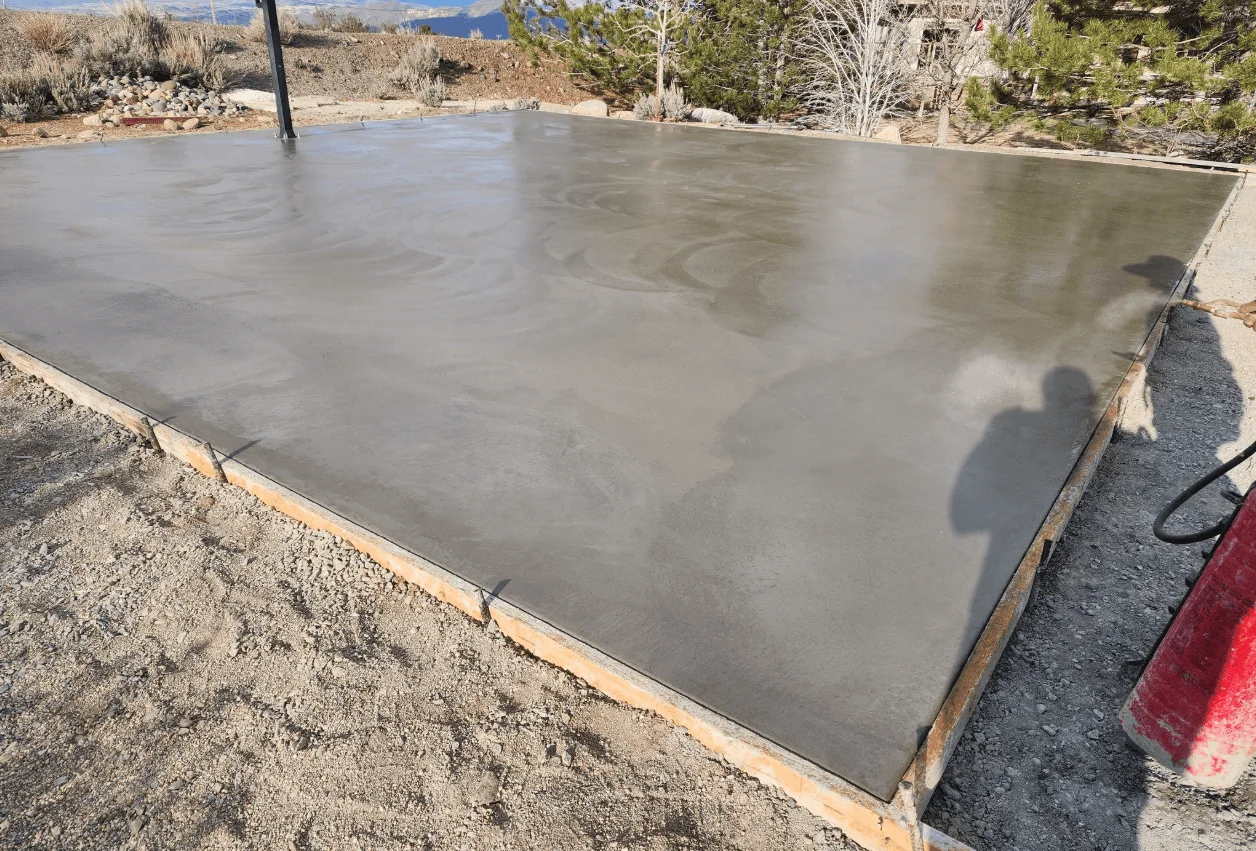
A strong build starts below the surface. Our foundation service begins with expert site prep—stabilizing soil and installing vapor barriers to block moisture. We reinforce every slab with precision-placed rebar designed to handle seismic movement and desert soil shifts. Whether it’s a mono-pour or stem wall, we ensure all structural elements are set with exact accuracy before pouring a high-PSI concrete mix. From ADUs to garage slabs, we coordinate all rough-ins and finish with proper grading for drainage. Even in harsh High Desert conditions, our process delivers a durable, level foundation built to last.
+1 323 209 0101
ADUs and Detached Structures
With the recent changes in California housing laws, many residents in Victorville and Adelanto are adding ADUs (Accessory Dwelling Units) to their properties. A Viva Concrete slab is the perfect starting point for these projects.
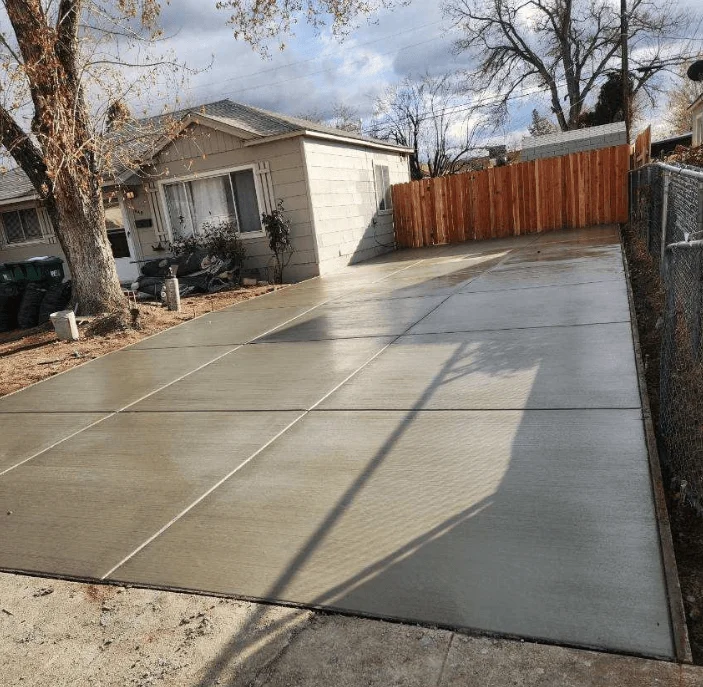
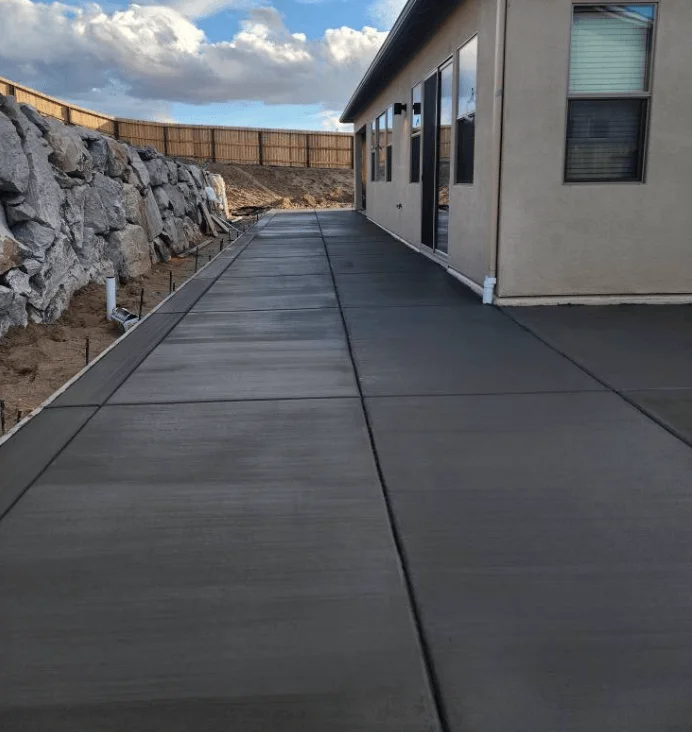
The standard for safety. Our fine-texture broom finish provides excellent traction during the rare High Desert snow or rain.
We trowel a smooth, 6-inch border around the edges of the broom-finished panels, giving your driveway a “custom home” look for a minimal additional cost.
We can add color to the “apron” (the part near the street) to create a distinct, high-end entrance that stands out in your neighborhood.
Managing Environmental Risks
Pouring a foundation in the High Desert isn’t like pouring “down the hill.” The wind in Hesperia and Apple Valley can reach speeds that flash-dry the surface of the concrete, causing “plastic shrinkage.” To combat this, Viva Concrete employs:
We use chemical sprays during the finishing process that create a molecular film on the surface, keeping the moisture inside the slab where it belongs.
In the winter months, when the High Desert dips below freezing, we use non-chloride accelerators and insulated blankets to ensure the concrete reaches its design strength without the water crystals freezing.
Given our proximity to the San Andreas Fault line, we ensure that every foundation has the proper “lap-splices” and corner reinforcements to help the building move as a single unit during an earthquake.