Cracks in a concrete driveway are one of the most common issues High Desert homeowners deal with — and one of the most misunderstood. Not every crack is a crisis. Some are normal, expected, and easily managed with routine maintenance. Others are early indicators of structural problems that will get significantly worse if ignored. Knowing which is which determines whether you need a $15 tube of filler or a professional assessment.
This guide covers the different types of concrete driveway cracks, what causes each type in the High Desert’s specific climate conditions, what can be repaired at the homeowner level, and when the scope of the problem requires a licensed concrete contractor.
Why Concrete Driveways Crack in the High Desert
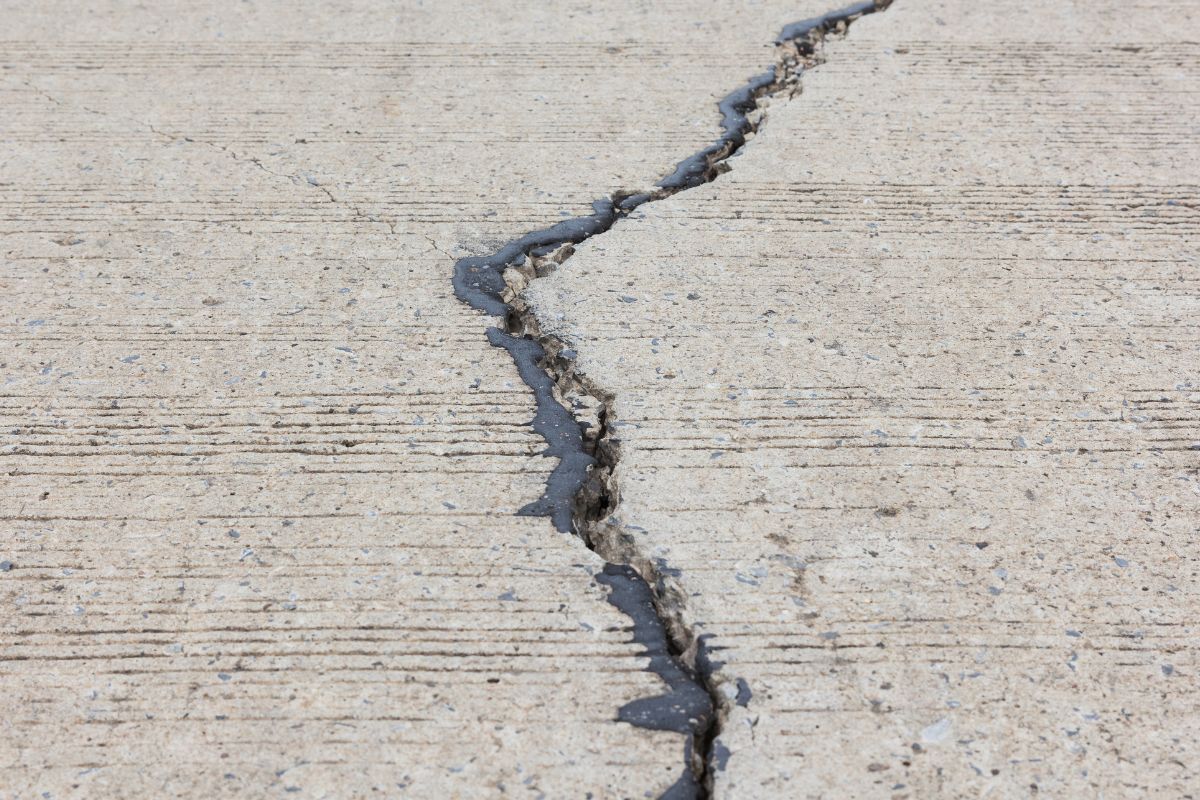
All concrete cracks eventually — the question is whether the cracking is controlled and cosmetic or uncontrolled and structural. In the Mojave Desert, several specific forces accelerate and amplify the cracking process.
Thermal expansion and contraction is the primary driver. Victorville’s extreme temperature range — from sub-freezing winter nights to 110°F summer afternoons — causes concrete to expand and contract repeatedly throughout its life. Control joints are placed during installation to direct this movement to planned locations, but concrete that lacks adequate joints, or where joint material has failed, cracks wherever the stress finds the weakest point in the slab.
Expansive desert soils compound the problem. The clay and sand compositions common beneath driveways in Victorville, Hesperia, and Adelanto swell when wet and shrink when dry — creating vertical movement beneath the slab that opens cracks from below. Water infiltrating through existing cracks accelerates this cycle significantly.
Types of Driveway Cracks and What They Mean
Hairline Cracks
Hairline cracks are narrow surface cracks — typically less than 1/16 inch wide — that develop during the concrete’s initial curing period or from minor thermal movement. They are almost always cosmetic and do not indicate structural compromise. In the High Desert, hairline cracks are common on driveways that were poured during high-wind conditions that caused plastic shrinkage, or on older slabs that have experienced decades of thermal cycling.
Hairline cracks that are stable — not growing wider or longer over time — can be left alone or filled with a concrete crack filler for cosmetic purposes. They do not require professional intervention unless they begin to widen.
Shrinkage Cracks
Shrinkage cracks develop as concrete loses moisture during curing and the slab contracts slightly. They are typically narrow, irregular in pattern, and appear in the first weeks to months after installation. Properly placed control joints minimize where shrinkage cracking occurs by providing planned weak points, but some degree of shrinkage cracking is normal even in well-installed slabs.
Stable shrinkage cracks that haven’t grown are cosmetic. Shrinkage cracks that are widening, deepening, or connecting across the slab surface indicate that something beyond normal shrinkage is at work and warrant closer inspection.
Settlement Cracks
Settlement cracks form when the soil beneath the slab shifts, causing sections to move relative to each other. In the High Desert, settlement cracks are distinguished by a height differential between the two sides of the crack — one section of the driveway has dropped lower than the adjacent section. This vertical displacement is the key indicator that the subgrade has moved, not just the concrete surface.
Settlement cracks are structural, not cosmetic. Filling the crack surface does not address the underlying soil movement. A settlement crack that is growing, or that has created a meaningful height differential, requires professional assessment to determine whether slab lifting, subbase stabilization, or full replacement is the appropriate response.
Structural Cracks
Structural cracks are wide (1/4 inch or more), extend through the full depth of the slab, and often appear in patterns that follow panel edges or run diagonally across sections. They indicate that the slab has lost structural integrity in the affected area — typically due to subgrade failure, overload from heavy vehicles on an undersized slab, or advanced thermal stress on concrete that lacked adequate reinforcement.
Structural cracks cannot be permanently repaired at the surface level. Professional intervention is required — either epoxy or polyurethane injection for isolated structural cracks that are otherwise stable, or panel replacement for sections with widespread structural failure. If structural cracking is present across multiple sections of your driveway, the post on 5 signs your concrete driveway needs full replacement will help you assess whether the scope of the problem has moved beyond repair.
Crack Repair: What Homeowners Can Handle
Hairline and Narrow Shrinkage Cracks
For cracks under 1/4 inch wide that are stable and not growing, a homeowner-level repair is reasonable. Clean the crack thoroughly with a wire brush and compressed air to remove all loose material, dirt, and debris. Apply a concrete crack filler — polyurethane-based products perform better in High Desert temperature swings than latex-based fillers, which can become brittle in extreme cold or soft in extreme heat. Tool the filler flush with the surface and allow to cure fully before vehicle traffic.
The repair won’t be invisible — any filled crack will remain visible as a line — but it seals the opening against water infiltration and prevents the crack from widening further. This is the primary goal: stopping the water infiltration cycle that accelerates crack growth in High Desert soil conditions.
Control Joint Maintenance
Control joint sealant that has cracked, pulled away from the edges, or become hard and incompressible should be replaced periodically. Remove the old sealant completely, clean the joint, and refill with a self-leveling polyurethane or silicone joint sealant rated for exterior concrete applications. This maintenance step is one of the most cost-effective things a High Desert homeowner can do to extend driveway lifespan — failed joint sealant is a primary water infiltration pathway.
When to Call a Professional Concrete Contractor
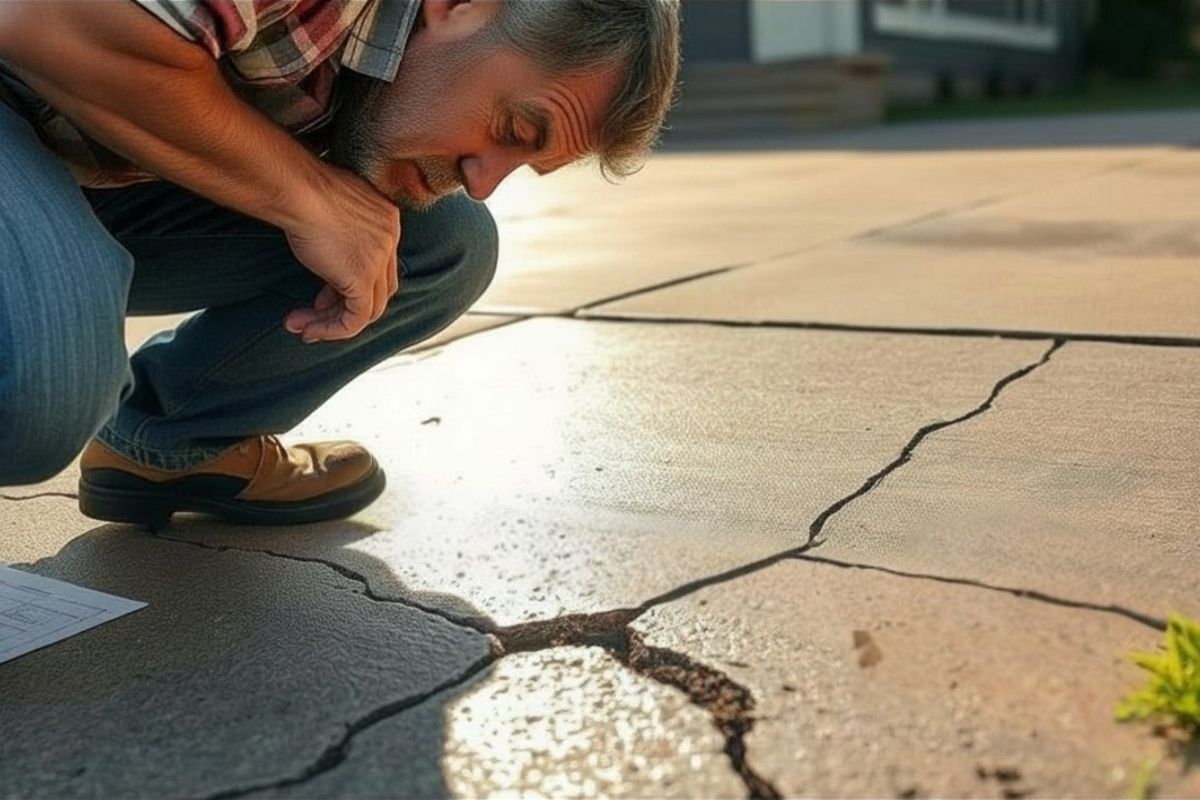
Several crack scenarios require professional assessment and repair beyond what homeowner-level products can address. Cracks wider than 1/4 inch that extend through the slab depth need epoxy injection or polyurethane grout injection to weld the two sides of the crack together and prevent moisture from reaching any rebar inside. This is structural repair work that requires professional equipment and material knowledge. Viva Concrete’s concrete repair and resurfacing service handles structural crack injection across Victorville, Apple Valley, Hesperia, and the surrounding High Desert area.
Settlement cracks with vertical displacement between panels require either mudjacking to restore the sunken section to grade, or panel replacement if the subgrade failure is too extensive for lifting to produce a durable result. Widespread cracking across multiple sections — where the pattern suggests systemic subgrade or structural failure rather than isolated surface events — should be evaluated by a contractor before additional repair investment is made.
Crack Repair vs Resurfacing vs Replacement: Choosing the Right Path
| Crack Condition | DIY Repair | Professional Repair | Replacement |
| Hairline / narrow shrinkage cracks (stable) | Yes | Optional | No |
| Control joint sealant failure | Yes | Optional | No |
| Cracks 1/4″ + through slab depth | No | Yes — epoxy/PU injection | If widespread |
| Settlement cracks with height differential | No | Yes — mudjacking or panel | If subgrade failed |
| Widespread structural cracking | No | Assessment required | Usually yes |
| Active water infiltration at cracks | Temporary only | Yes — professional sealing | If structural |
Preventing New Cracks After Repair
The most effective crack prevention strategy in the High Desert is keeping water out of the slab. Professional sealing every two to three years, prompt joint sealant replacement, and clearing the driveway of standing water after rain events all reduce the infiltration cycle that drives crack growth in the Mojave Desert’s expansive soils. For a complete overview of proactive maintenance, Viva Concrete’s concrete repair, resurfacing, and maintenance services include annual inspection programs that identify developing issues before they require major repair investment.
For homeowners in Phelan, Oak Hills, Barstow, and Rancho Cucamonga with questions about their driveway’s crack condition, Viva Concrete provides free on-site assessments. Call +1 323 209 0101 or reach out through the contact page to schedule.
Viva Concrete provides professional concrete repair and resurfacing services across the High Desert. Call +1 323 209 0101 for a free assessment.