Cracking is the most common complaint about concrete driveways in the High Desert — and also one of the most preventable. The majority of premature concrete driveway cracking that Viva Concrete sees across Victorville, Apple Valley, Hesperia, and the surrounding region isn’t random bad luck. It’s the predictable result of specific decisions made during installation and specific maintenance steps that were skipped afterward.
This post covers crack prevention from both angles: what needs to happen during installation to give a High Desert driveway the best structural foundation, and what ongoing maintenance keeps that foundation performing through the Mojave Desert’s extreme thermal cycling, UV exposure, and expansive soil conditions.
Why High Desert Driveways Are More Prone to Cracking
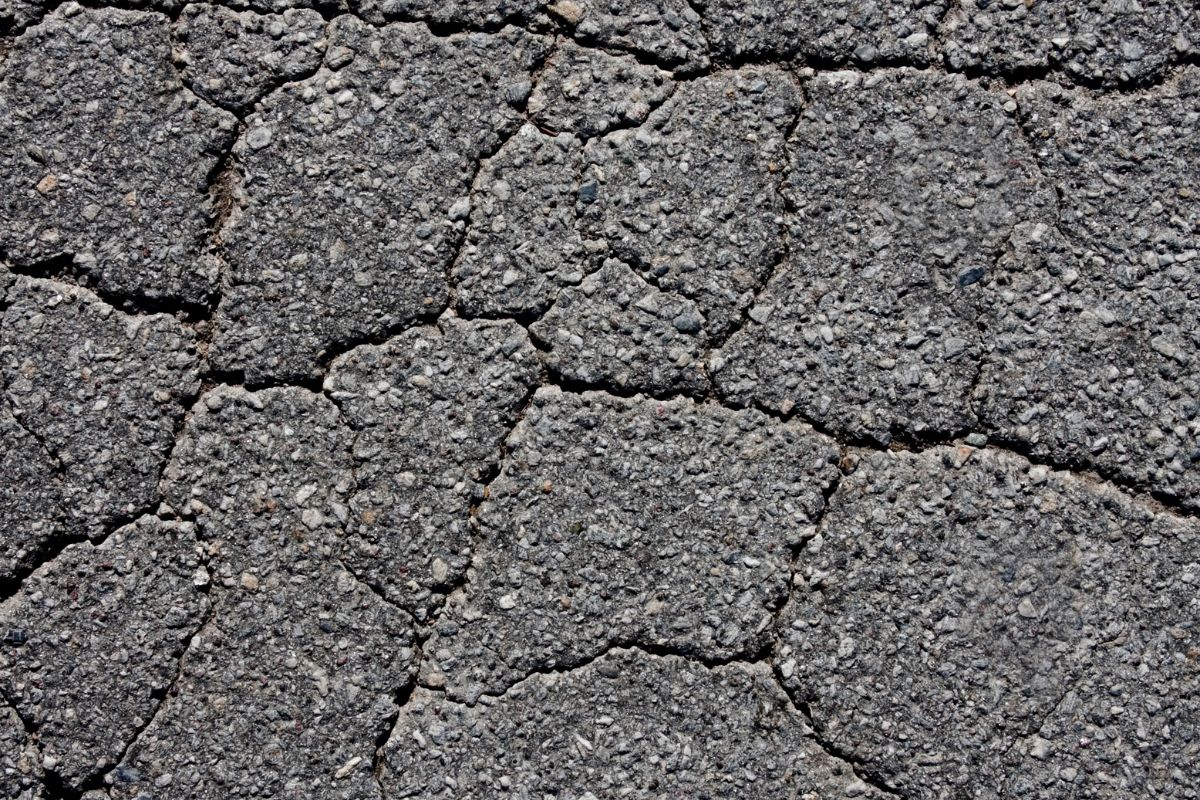
Before covering prevention, it helps to understand what makes the High Desert uniquely challenging for concrete. Three climate and soil factors combine in ways that don’t exist to the same degree in coastal or more temperate California markets.
First, extreme thermal cycling. Victorville temperatures swing from below freezing on winter nights to above 110°F on summer afternoons. Concrete expands in heat and contracts in cold — repeatedly, throughout its life. This cycling creates cumulative stress that eventually causes cracking if the slab wasn’t designed and built to accommodate it through proper joint placement and reinforcement.
Second, expansive desert soils. The clay-rich and sandy soils beneath High Desert driveways swell when wet and shrink when dry. Seasonal moisture variation — from rare but significant rainfall events to dry summer stretches — causes the ground beneath a slab to move vertically. A slab poured over soil that hasn’t been properly excavated and compacted moves with it, and movement means cracking.
Third, high UV intensity. UV radiation in the Mojave is among the highest in the continental United States. It degrades joint sealants, breaks down surface sealers, and accelerates the oxidation of the cement matrix near the surface. Sealant and sealer failures open pathways for water infiltration — and water beneath a High Desert slab triggers the swell-shrink cycle that cracks slabs from below.
Prevention During Installation: What Matters Most
1. Proper Subgrade Preparation
This is the single most impactful crack prevention measure available — and the one most often shortchanged by contractors trying to lower their quote. Proper subgrade preparation means excavating to the required depth (typically 6 to 8 inches below finished grade for a 5-inch residential driveway), removing all organic material and loose soil, treating expansive clay where present, and compacting the base to a density that will support the slab through seasonal soil movement.
Viva Concrete allocates approximately 60 percent of project time to subgrade preparation on every driveway installation across Victorville, Hesperia, and Adelanto. A slab poured over properly prepared ground in the High Desert will outlast one poured over inadequate prep by decades, regardless of what happens at the surface.
2. Correct Concrete Thickness
Thicker concrete resists the bending forces from vehicle loads and soil movement more effectively than thinner concrete. The national residential standard of 4 inches is the minimum in the High Desert — Viva Concrete’s baseline specification is 5 inches for passenger vehicle driveways, with 6 inches specified for driveways supporting RVs, loaded trucks, or other heavy vehicles.
The post on concrete driveway thickness for RVs and trucks covers the full specification table by vehicle type. For standard residential applications, 5 inches with proper reinforcement is the specification that gives a High Desert driveway the structural depth to resist the forces it will face over a 30 to 40-year service life.
3. Rebar on Chairs, Not Wire Mesh
Proper reinforcement positioned at mid-depth of the slab resists the tensile forces that cause cracking. Rebar on plastic or concrete chairs holds the steel at the correct depth during the pour — in the tension zone where bending forces are highest — rather than allowing it to sink to the bottom of the slab where it provides little structural benefit.
Wire mesh, the most common lower-cost alternative, almost universally ends up at the bottom of the slab during placement and provides inadequate tensile reinforcement compared to properly positioned rebar. The post on what rebar is and why it makes your driveway last longer covers this in detail if you want to understand the engineering behind the recommendation.
4. Correct Control Joint Placement
Control joints are intentional weak points — saw cuts or tooled grooves placed at regular intervals across the slab surface. They don’t prevent cracking; they direct it. By creating planned weak points where the slab is thinner, control joints ensure that the cracking caused by thermal expansion and contraction happens at predetermined, less visible locations rather than randomly across the slab surface.
In the High Desert, control joints should be placed at intervals no greater than 10 feet in either direction for a standard residential driveway — closer spacing than the 12-foot intervals sometimes used in more temperate climates. The extreme temperature range means more thermal movement per degree, which requires more frequent joints to accommodate it without cracking between them.
5. High Desert-Appropriate Concrete Mix
Concrete specified at 4,000 PSI or higher resists the thermal stress of High Desert conditions more effectively than the 3,000 or 3,500 PSI mixes commonly used in less demanding climates. Lower water-to-cement ratios — achieved by using the minimum water necessary for workability — produce denser, stronger concrete with fewer internal voids that can become crack initiation points under thermal cycling.
Viva Concrete sources all concrete mix from local High Desert batch plants and specifies PSI ratings based on the project’s load, exposure, and soil conditions rather than defaulting to the minimum residential specification.
6. Proper Curing
The first week after placement is the most critical period of a concrete slab’s life. During this time the concrete gains most of its design strength through a chemical process — hydration — that requires moisture. High Desert conditions actively work against proper curing: intense heat evaporates surface moisture, low humidity accelerates drying, and high-velocity spring winds can strip moisture from fresh concrete within minutes.
Viva Concrete applies curing compounds to every new slab immediately after finishing to retain surface moisture, monitors wind conditions during vulnerable pour windows, and uses evaporation retarders when conditions require them. A slab that cures too fast in High Desert conditions develops surface shrinkage cracks before the concrete has gained sufficient strength to resist them — a failure that begins at day one.
Prevention Through Ongoing Maintenance
Professional Sealing Every 2 to 3 Years
A quality penetrating or film-forming sealer applied to the driveway surface locks out moisture, oil, and UV radiation. In the High Desert, sealing is more important than in mild climates because the combination of UV intensity and occasional moisture events creates more aggressive sealer degradation. An unsealed High Desert driveway allows water to infiltrate through the cement matrix, reach the subgrade, and trigger the swell-shrink cycle that cracks slabs from below.
Joint Sealant Maintenance
Control joint sealant that has cracked, hardened, or pulled away from the joint walls allows water to infiltrate directly into the joint — bypassing the slab surface entirely. Inspecting joint sealant annually and replacing it when it has deteriorated is one of the highest-value maintenance steps a High Desert homeowner can take. Failed joint sealant that allows water beneath the slab contributes more to cracking than almost any other maintenance failure.
Prompt Crack Filling
Small cracks filled promptly don’t become large cracks. Any crack that opens in the slab surface — even a hairline — is a water infiltration pathway that should be sealed before a rain event allows water to reach the subgrade. Polyurethane-based crack filler performs better than latex in High Desert thermal cycling conditions, maintaining flexibility across the temperature range rather than becoming brittle in cold or soft in heat. The post on how to repair cracks in your concrete driveway covers the right products and process for each crack type.
Manage Irrigation and Drainage
Irrigation water directed onto or near the driveway is one of the most common causes of subgrade moisture variation in High Desert residential properties. Sprinkler heads aimed toward the driveway edge, drip lines running under or near the slab, and planter areas adjacent to the driveway that retain water all contribute to the swell-shrink cycle beneath the slab. Redirecting irrigation away from the driveway edge and ensuring positive drainage away from the slab are maintenance steps that directly reduce subgrade movement and the cracking it causes.
Crack Prevention Checklist
| Prevention Measure | Stage | Impact on Crack Risk |
| Proper subgrade excavation and compaction | Installation | Very High |
| 5″+ concrete thickness (High Desert standard) | Installation | High |
| #3 or #4 rebar on chairs at mid-depth | Installation | High |
| Control joints at 10 ft max spacing | Installation | High |
| 4,000 PSI+ concrete mix | Installation | Moderate–High |
| Curing compound + moisture retention | Installation | Moderate–High |
| Professional sealing every 2–3 years | Maintenance | High |
| Joint sealant inspection and replacement | Maintenance | High |
| Prompt crack filling | Maintenance | Moderate |
| Irrigation and drainage management | Maintenance | Moderate |
If Cracking Has Already Started
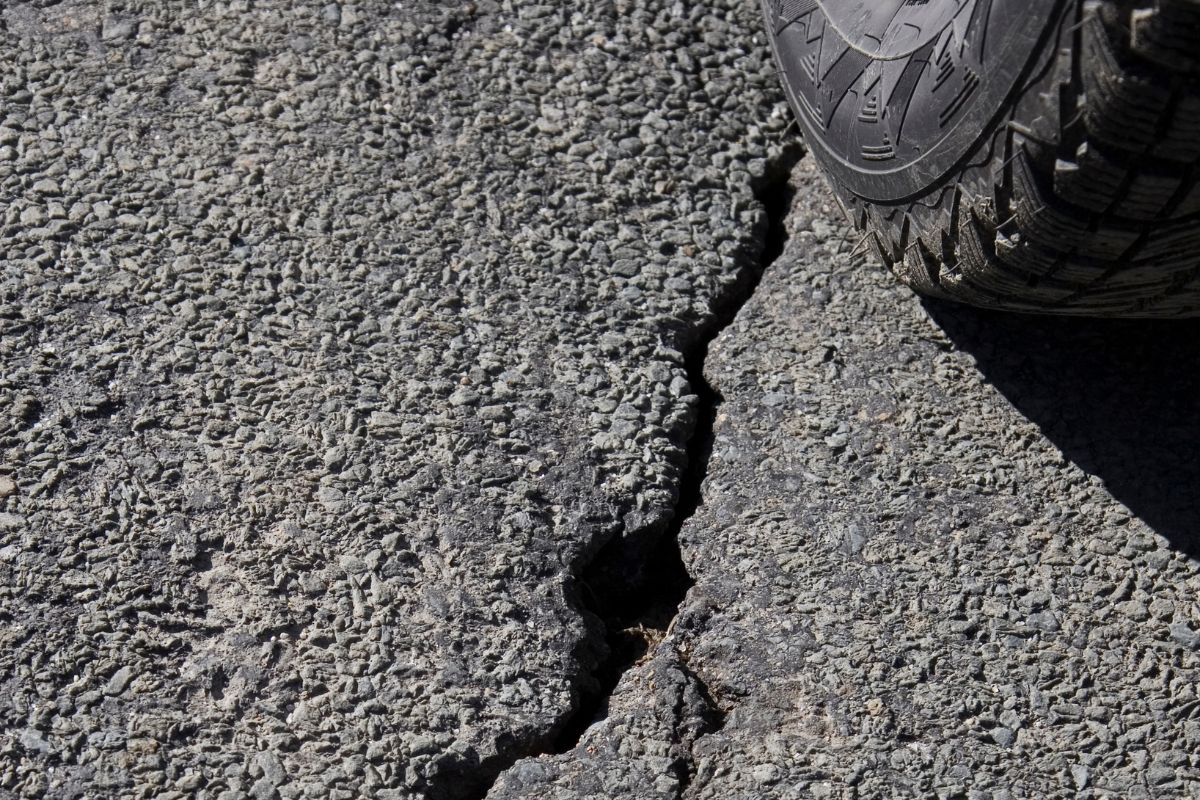
Crack prevention is most effective when it starts at installation. But for homeowners with an existing driveway that’s showing early signs of cracking, prompt maintenance action slows the progression significantly. Viva Concrete’s concrete repair and maintenance services include professional sealing, joint sealant replacement, and crack filling across Victorville, Apple Valley, Hesperia, Phelan, Oak Hills, Barstow, and Rancho Cucamonga.
For homeowners planning a new driveway and wanting to build it right from the start, Viva Concrete provides free on-site estimates with a written specification covering every element of the installation. Call +1 323 209 0101 or reach out through the contact page to get started.
Viva Concrete is the High Desert’s concrete authority. Visit the concrete driveway service page or call +1 323 209 0101 for a free estimate.