
When planning a new concrete driveway in the High Desert, two finish options come up in almost every conversation: broom finish and exposed aggregate. Both are practical, both perform well in desert conditions, and both are offered by Viva Concrete as standard options across Victorville, Apple Valley, Hesperia, and the surrounding region. The question isn’t which one is objectively superior — it’s which one is right for your specific property, budget, and maintenance expectations.
This post compares broom finish and exposed aggregate head to head across every factor that matters for a High Desert driveway — appearance, traction, durability, cost, repairability, and maintenance — so you can make the decision with full information rather than guesswork.
What Each Finish Is and How It’s Created
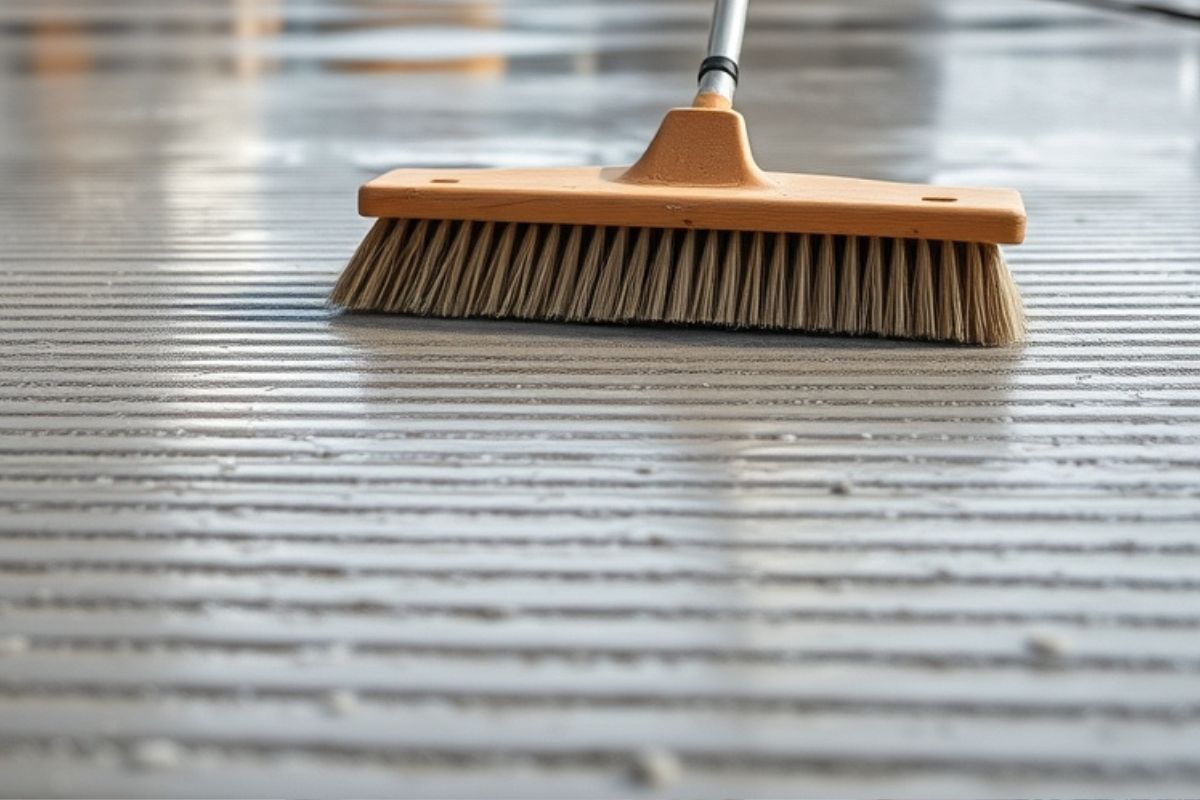
Broom Finish
A broom finish is applied to freshly placed concrete before it fully sets. A stiff-bristled broom is drawn across the surface in a consistent direction — typically perpendicular to traffic flow — creating parallel ridges and channels that provide texture and traction. The process is fast, adds no material cost, and produces a clean, uniform appearance that works with virtually any home style.
Broom finish is the most widely used residential concrete finish in the United States and the standard specification for most driveways in the High Desert. Its ubiquity reflects genuine merit — it performs reliably, requires minimal maintenance, and holds up well under the thermal cycling and UV exposure that Mojave Desert driveways experience year-round.
Exposed Aggregate
Exposed aggregate is created by seeding the surface of fresh concrete with decorative stone — river pebbles, crushed granite, quartz, or similar aggregate — and then washing and brushing the top layer of cement paste away before full cure. This reveals the tops of the embedded stones, creating a multi-toned, textured surface that highlights the natural material.
The aggregate selection is a significant design decision. In the High Desert context, locally appropriate aggregates — crushed desert granite in warm tans and rusts, river-washed pebbles in neutral grays — blend naturally with the surrounding landscape. Aggregates can also be selected to complement a home’s exterior color palette, giving exposed aggregate driveways a level of visual customization that broom finish cannot match.
Appearance: The Clearest Difference
This is where the two finishes diverge most noticeably. Broom finish produces a clean, linear surface that reads as uniform and architectural. It’s an appropriate match for contemporary, craftsman, ranch, and traditional home styles — essentially all residential architecture common in the High Desert. It looks intentional and professional without drawing significant attention to itself.
Exposed aggregate has more visual character. The multi-toned stone surface creates depth and texture that broom finish can’t replicate. It looks more like a natural material than a poured surface, which appeals to homeowners who want their driveway to feel like a design element rather than a functional necessity. In neighborhoods with desert landscaping, stone hardscaping, or natural material exteriors, exposed aggregate integrates particularly well.
For homeowners who want maximum visual impact — beyond what either broom or exposed aggregate can deliver — stamped and decorative concrete offers patterns and colors that mimic slate, flagstone, brick, and other premium materials. The post on best concrete driveway finishes for desert curb appeal covers the full range of options if you want to see all finish categories before deciding.
Traction and Safety
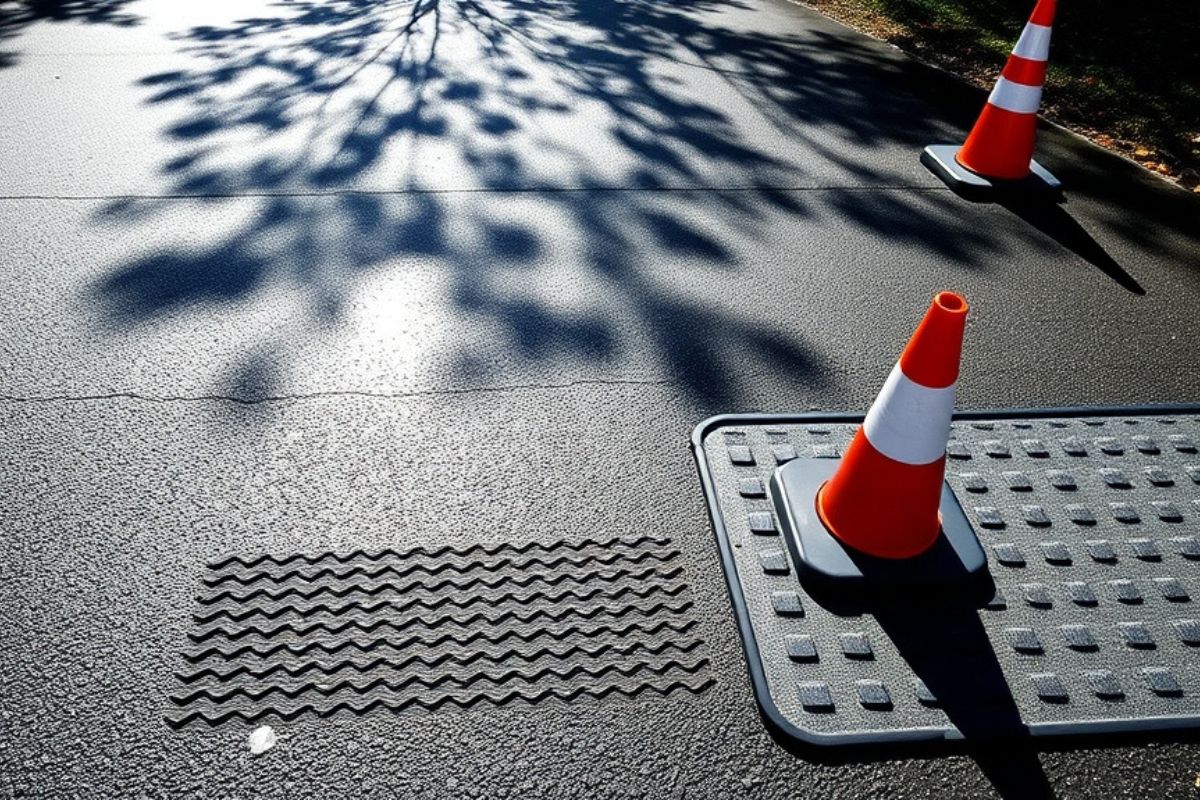
Both broom finish and exposed aggregate provide excellent traction — significantly better than a smooth troweled surface. In the High Desert, traction matters most in two specific scenarios: after the infrequent but significant rainfall events that can leave oily, dusty residue on driveway surfaces, and in areas where sand and fine dust accumulate and create a slippery film on hard surfaces.
Exposed aggregate has a slight traction advantage because the raised stones create more surface irregularity than broom channels. The multi-directional texture of exposed aggregate provides grip regardless of the direction of travel, whereas broom finish texture runs in a single direction and provides slightly less cross-directional grip on steep driveways. For flat or gently sloped driveways — the majority of High Desert residential applications — the difference is minimal in practice.
Durability in the Mojave Desert
Both finishes are applied to the same concrete substrate with the same structural specifications, so the durability of the slab itself is identical regardless of which finish is on top. The question is how each finish weathers at the surface level over time.
Broom finish weathers predictably. The ridges flatten slightly over years of vehicle traffic and weathering, which gradually reduces the texture’s prominence. After 15 to 20 years of High Desert service, a broom finish driveway that hasn’t been resealed may look somewhat worn compared to its original appearance — but it remains functional and structurally sound. Resealing restores a fresh, consistent look.
Exposed aggregate weathers differently. The stone itself is highly durable and essentially unaffected by UV, heat, or traffic over decades. What can change is the cement matrix surrounding the aggregate — if the surface sealer is neglected, the matrix can erode slightly over years of High Desert weathering, gradually deepening the exposure of the stones. Moderate deepening actually improves the texture; excessive exposure over decades without maintenance can loosen smaller aggregate pieces from the surface.
Cost Comparison in the High Desert
| Factor | Broom Finish | Exposed Aggregate |
| Base installation cost | Included in standard rate | $1 – $3/sq ft premium |
| 500 sq ft driveway premium | $0 added | $500 – $1,500 added |
| Aggregate material cost | None | Moderate — depends on stone |
| Sealing requirement | Optional, every 3–5 yrs | Recommended, every 2–3 yrs |
| Repair / patch visibility | Low — easy to blend | High — aggregate matching difficult |
| Long-term maintenance cost | Low | Low–Moderate |
Repairability: The Hidden Factor
This is the factor most homeowners don’t consider until years after installation — and it significantly favors broom finish. When a concrete driveway develops an isolated crack or damage that requires patching, broom finish is far easier to repair invisibly. A patch blended with the right concrete mix and broomed to match the existing texture direction is difficult to detect from a normal viewing distance.
Exposed aggregate patches are almost always visible. Matching the exact aggregate type, size, color distribution, and exposure depth of an existing surface that has weathered for years is extremely difficult. A patched section of exposed aggregate driveway stands out against the surrounding surface regardless of how carefully the repair is executed.
For driveways in High Desert communities where soil movement and thermal cycling create a higher-than-average likelihood of needing a repair at some point over a 30 to 40-year lifespan, this repairability difference is a real practical consideration — not just a theoretical one.
Maintenance Requirements
Both finishes benefit from professional sealing to protect against oil infiltration, UV degradation, and moisture penetration. For broom finish, sealing is beneficial but not critical to maintaining the surface’s function — the texture performs well even without a sealer film. For exposed aggregate, sealing is more important because it protects the cement matrix surrounding the aggregate from erosion and helps maintain the surface’s color depth. Viva Concrete’s concrete maintenance services include professional sealing for both finish types across the full High Desert service area.
Which Is Better for Your High Desert Driveway?
Broom finish is better when budget efficiency, easy repairability, and minimal ongoing maintenance are the priorities. It delivers reliable performance across the full High Desert service area with no meaningful limitations — it’s the right choice for the majority of residential driveways.
Exposed aggregate is better when visual distinctiveness and natural aesthetic integration matter more than the modest cost premium and slightly more demanding maintenance schedule. For properties with desert landscaping, stone hardscaping, or natural material exteriors in Apple Valley, Oak Hills, or Phelan, exposed aggregate creates a driveway that feels genuinely connected to its environment.
Viva Concrete installs both finishes with the same engineering-first approach — proper subgrade preparation, appropriate concrete thickness and reinforcement, High Desert-specific mix design, and correct curing procedures that protect the finish during the vulnerable first days after placement. To discuss which finish is right for your property and get a free written estimate, call +1 323 209 0101 or reach out through the contact page. Viva Concrete serves Victorville, Apple Valley, Hesperia, Adelanto, Oak Hills, Phelan, Barstow, and Rancho Cucamonga.
Viva Concrete is the High Desert’s concrete authority. Visit the concrete driveway service page or call +1 323 209 0101 for a free estimate.