A concrete driveway installed by a qualified contractor using appropriate materials and techniques can last 30 to 50 years in the High Desert. That range is meaningful — the difference between a driveway that’s replaced after 25 years and one that’s still performing well after 45 years comes down to specific decisions made during installation and maintenance choices made over the life of the slab.
The Mojave Desert is one of the most demanding environments for concrete in the United States. Understanding what specifically challenges concrete in this climate — and what counters those challenges — gives High Desert homeowners a clear picture of what their driveway needs to reach the upper end of that lifespan range.
What the Mojave Climate Does to Concrete
Thermal Cycling
The single most significant stress factor for concrete in the High Desert is the extreme temperature range the material experiences across seasons and even within a single day. Victorville temperatures range from below freezing on winter nights to over 110°F on summer afternoons. Concrete expands in heat and contracts in cold — and it does this repeatedly, every day, across the life of the slab.
This thermal cycling creates cumulative stress at the molecular level of the concrete matrix. Properly placed control joints allow the slab to move in a controlled way, directing cracking to planned locations. Concrete without adequate control joints — or with joints that have been allowed to deteriorate and fill with incompressible material — has nowhere to accommodate this movement and cracks unpredictably.
UV Radiation and Surface Degradation
The California High Desert receives intense UV radiation year-round. While UV doesn’t compromise the structural integrity of concrete the way it does asphalt’s bitumen binder, it does degrade sealers, causes surface chalking and color fading in decorative concrete, and breaks down joint sealants over time. Regular resealing addresses this — but skipped sealing cycles allow UV damage to accumulate.
UV degradation is especially relevant for stamped and decorative concrete driveways, where color stability is part of the product’s value. Viva Concrete uses UV-stable integral colors and release agents specifically selected for High Desert sun exposure.
Expansive Desert Soils
Victorville and the surrounding High Desert communities sit on expansive soils — clay and sand compositions that swell when wet and shrink when dry. A concrete slab poured over soil that hasn’t been properly excavated, treated, and compacted is resting on a base that will move seasonally. That movement translates directly into slab movement, cracking, and settling over time.
This is why Viva Concrete invests approximately 60 percent of project time in subgrade preparation before any concrete is placed. The quality of the base underneath the slab is the single most important determinant of how long that slab will last. Learn more about this approach on the High Desert Heritage & Excellence page.
High-Velocity Desert Wind
Strong winds during spring months are a specific High Desert hazard for fresh concrete. Wind strips moisture from the surface of a new pour faster than the interior of the slab can hydrate, creating a condition called plastic shrinkage — surface cracking that develops before the concrete has gained enough strength to resist it. A contractor who doesn’t monitor wind conditions and apply evaporation retarders during vulnerable curing windows is producing a driveway that starts its life already compromised.
Viva Concrete crews are trained to monitor wind speeds during every pour across Victorville, Hesperia, and Phelan — areas particularly exposed to high-velocity desert wind — and apply specialized evaporation retarders at the exact moment conditions require it.
What Determines Where Your Driveway Falls on the Lifespan Range
Installation Quality
The single biggest determinant of driveway lifespan is installation quality. A driveway poured over properly prepared subgrade, with adequate concrete thickness (5 to 6 inches for High Desert residential applications), #4 rebar on chairs rather than wire mesh at the bottom of the slab, correct control joint spacing, and proper curing procedures will consistently outperform one that cut corners on any of these steps — regardless of what maintenance follows.
Concrete Mix Specification
Not all concrete is the same. Residential driveways in the High Desert should be specified at 4,000 PSI or higher to account for thermal stress and soil movement. Lower-PSI mixes that might be acceptable in milder climates crack more readily under Mojave Desert conditions. Viva Concrete sources all mix from local High Desert batch plants and specifies PSI ratings appropriate to the project’s load and exposure conditions.
Maintenance Consistency
A well-built driveway that receives no maintenance will underperform one built to the same standard that receives regular sealing and joint maintenance. Professional sealing every two to three years locks out moisture, oil, and UV degradation. Joint caulking maintenance prevents water infiltration beneath the slab — the leading cause of settling in High Desert driveways. Viva Concrete’s concrete repair, resurfacing, and maintenance services cover all of these ongoing maintenance needs for homeowners across the High Desert.
Realistic Lifespan Expectations by Scenario
| Installation Scenario | Maintenance Level | Expected Lifespan |
| Proper subgrade, 5–6 in, #4 rebar, 4,000 PSI | Regular sealing + joint care | 40 – 50 years |
| Standard spec, 4–5 in, rebar, 3,500 PSI | Consistent sealing + maintenance | 30 – 40 years |
| Standard spec with minimal maintenance | Occasional crack fill only | 20 – 30 years |
| Inadequate subgrade prep regardless of surface spec | Any level | 10 – 20 years |
These are High Desert-specific estimates. National averages often cite 30 years as a baseline — in the Mojave, installation quality and maintenance consistency create a wider range of outcomes than in milder climates.
How to Maximize Your Driveway’s Lifespan
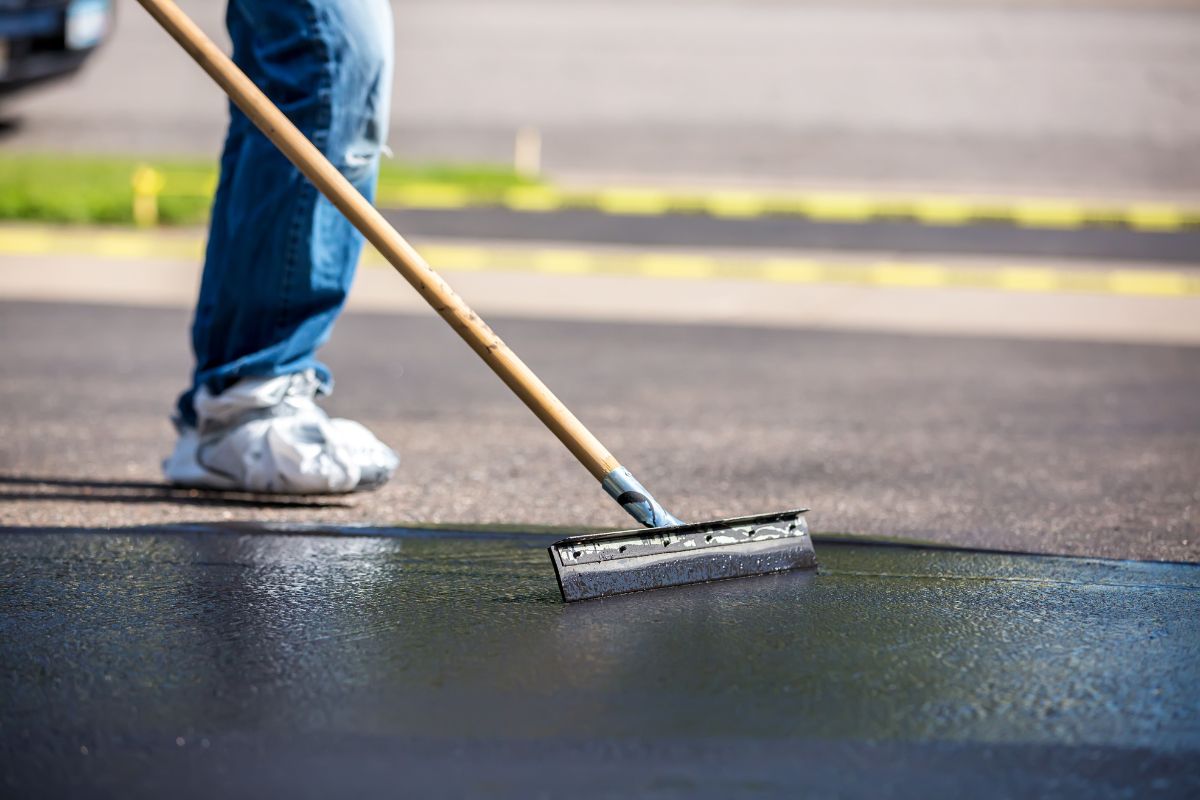
The maintenance actions that most directly extend driveway lifespan in the High Desert are professional sealing every two to three years, joint sealant replacement when existing material has cracked or pulled away, prompt crack filling before water can infiltrate, and keeping the surface clear of oil and chemical stains that degrade the cement matrix over time.
For homeowners in Apple Valley, Adelanto, Oak Hills, Barstow, and Rancho Cucamonga looking to protect their existing driveway investment, Viva Concrete’s maintenance programs include professional sealing, joint caulking, and annual inspections that catch small issues before they become structural failures.
Assessing Your Current Driveway
For homeowners assessing whether their current driveway still has life in it or is approaching replacement territory, a free on-site evaluation from Viva Concrete provides a clear, honest answer. If you are seeing signs of widespread cracking, settling, or surface degradation, the post on 5 signs your concrete driveway needs full replacement can help you frame what you’re seeing before scheduling an assessment.
Call +1 323 209 0101 or reach out through the contact page to schedule a free site visit across any of our High Desert service locations.
Viva Concrete is the High Desert’s concrete authority. Visit the concrete driveway service page or call +1 323 209 0101 for a free estimate.